





The Shocking Truth About Sortie: 5 Costly Mistakes Everyone Must Avoid
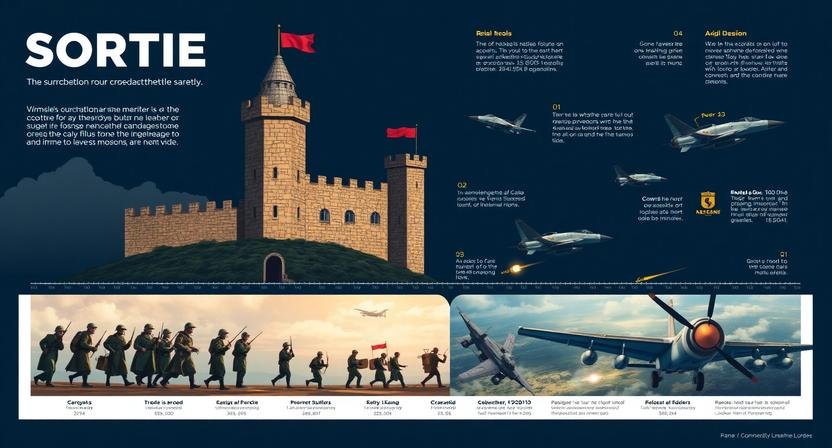
Table of Contents
Understanding What a Sortie Really Means
The word sortie sounds mysterious to many people, and that mystery often leads to confusion. Originally derived from French, the term literally means “to go out.” Historically, it referred to soldiers leaving a defensive position to launch a sudden attack against enemies surrounding them. Over time, the meaning evolved and became widely used in military aviation. Today, one aircraft taking off and completing a single operation is generally counted as one sortie. Military organizations around the world use sortie counts to measure operational tempo and readiness. Understanding this seemingly simple word can prevent many misconceptions that people often encounter when reading news reports or military analyses.
Origin of the Term
The term originated centuries ago during siege warfare. Defenders trapped inside castles or fortified positions would launch surprise attacks against besieging forces. These attacks were called sorties because troops temporarily exited their strongholds before returning to safety. As warfare evolved, the concept expanded beyond ground operations.
Modern Usage in Military and Aviation
Modern aviation uses the word differently. A single aircraft flying one operation from takeoff to landing counts as one sortie, regardless of whether the purpose is training, reconnaissance, transport, or combat.
Why the Word Sortie Creates Confusion
Many readers assume that every mention of a sortie means bombs are falling somewhere. That assumption is far from reality. News reports frequently mention hundreds of sorties during military exercises, but those flights often involve training rather than combat. The confusion exists because movies and popular culture usually portray military aircraft only during battle scenes.
Context is everything. For example, six aircraft participating in one mission represent six separate sorties because each aircraft completes an individual flight. Military planners rely on these numbers to understand workload, maintenance requirements, and readiness levels. Without understanding the context, people often misinterpret statistics and headlines.
Mistake #1: Assuming Every Sortie Means Combat
This is perhaps the biggest misunderstanding. A sortie can involve surveillance, cargo transport, pilot training, search-and-rescue operations, or combat. Many military aircraft spend the majority of their flying hours performing non-combat tasks. Even during wartime, numerous sorties support logistics and intelligence gathering rather than direct attacks.
Combat vs Training Missions
Pilots routinely fly training sorties to maintain proficiency. These operations ensure crews remain prepared for emergencies and future missions. Search-and-rescue helicopters also conduct sorties, as do transport aircraft delivering supplies. Thinking every sortie equals a bombing mission creates a distorted picture of military operations.
Mistake #2: Confusing a Mission With a Sortie
People often use these words interchangeably, but they are not identical. A mission represents the overall objective. A sortie represents the flight of one individual aircraft. Imagine a major operation requiring six aircraft. Although the mission is singular, six separate sorties are recorded.
How Sorties Are Counted
Military planners carefully track every takeoff and landing. One plane making one trip equals one sortie. Four planes flying together equal four sorties. This distinction helps commanders measure resource usage, maintenance schedules, and operational capacity.
Mistake #3: Ignoring Historical Significance
The historical roots of the word provide valuable context. During medieval warfare, defenders trapped behind walls launched quick attacks to disrupt enemies. These actions were risky and often decisive. Understanding this origin reveals how military language adapts over centuries.
Sorties in Siege Warfare
Sorties aimed to destroy enemy siege equipment, gather intelligence, or weaken attackers. Sometimes these raids determined whether a city survived. The same spirit of temporary deployment continues today, although modern aircraft have replaced medieval cavalry.
Mistake #4: Misunderstanding Sortie Rates
Military analysts frequently discuss sortie rates. This phrase refers to how many operations a unit can sustain over a period of time. High sortie rates demonstrate efficiency, strong logistics, and effective maintenance systems.
Why Militaries Track Sortie Numbers
Sortie rates help evaluate readiness. Aircraft maintenance crews, fuel supplies, spare parts, and pilot availability all affect how many flights can be supported. During large conflicts, commanders depend heavily on sortie rates to maintain air superiority. Even advanced aircraft are only as effective as the support systems that keep them flying.
Mistake #5: Using the Term Incorrectly
Outside military circles, people occasionally misuse the word to describe any journey or adventure. While dictionaries recognize broader meanings, the term remains strongly associated with military and aviation contexts. Using it incorrectly can create unnecessary confusion.
Proper Usage in Everyday Language
Writers sometimes use “sortie” metaphorically to describe short excursions or brief outings. Although technically acceptable, understanding the military definition provides clearer communication. Language evolves, but context still matters.
Sortie in Modern Air Warfare
Modern air forces rely heavily on sortie generation. Fighter aircraft, reconnaissance planes, drones, transport aircraft, and helicopters all contribute to overall operational capability. The number of sorties flown often reveals the intensity of an operation.
Examples From Aviation
One aircraft completing three flights during a day has performed three sorties. A squadron of twenty aircraft each flying twice daily would generate forty sorties. Such statistics help analysts understand the scale and complexity of operations. This system provides a practical way to measure military activity without revealing sensitive mission details.
Why Understanding Sortie Matters Today
Military terminology often appears in international news. Understanding words like sortie allows readers to interpret reports more accurately. It also prevents sensational misunderstandings when headlines mention hundreds of sorties. Those numbers may indicate training exercises rather than active warfare.
Knowledge works like a map. Without it, headlines can seem alarming or misleading. With it, readers gain a clearer picture of how military organizations operate and communicate. The word sortie represents much more than an attack—it symbolizes organization, readiness, and operational capability.
Readers interested in staying updated on the latest trends, breaking stories, and in-depth analysis can also explore our Latest News section. We regularly cover developments in gaming, technology, entertainment, and global events to keep you informed about emerging stories and industry updates. For more recent coverage and trending articles, visit Global News Signal’s Latest News at https://globalnewssignal.com/category/latest/.
Conclusion
The truth about sortie is surprisingly simple. The term refers to a deployment or flight operation, not necessarily combat. Confusing missions with sorties, ignoring historical roots, misunderstanding sortie rates, and assuming every operation involves attacks are common mistakes that lead to misinformation. By understanding the meaning and context behind the word, readers can interpret military reports with greater confidence and accuracy.
FAQs
What is a sortie?
A sortie is generally one operation or flight conducted by a single military aircraft from takeoff to landing.
Does every sortie involve combat?
No. Sorties can include training, transport, reconnaissance, and rescue missions in addition to combat operations.
How is a sortie different from a mission?
A mission is the objective, while a sortie refers to the individual flight performed by one aircraft.
What is a sortie rate?
A sortie rate measures how many operations a military unit can sustain over a given period.
Where did the term originate?
The term comes from French and originally described troops leaving a defensive position to attack besieging forces.