





3 Theories Behind the Massive Boom Heard Across Northeast Ohio — Meteor or Something Else?
Table of Contents
What Happened in Northeast Ohio?
A sudden, thunderous boom rattled homes across Northeast Ohio, leaving thousands of residents confused, concerned, and searching for answers. The sound was powerful enough to shake windows, trigger car alarms, and send people rushing outside to see what had happened. Many described it as an explosion, while others compared it to a sonic boom or even an earthquake-like vibration. The mystery deepened as no immediate official explanation surfaced, turning a local incident into a trending topic across the internet.
This type of unexplained event often sparks curiosity and fear at the same time. When something disrupts the normal rhythm of daily life so dramatically, people instinctively try to connect the dots. Was it something natural like a meteor entering Earth’s atmosphere, or was it man-made—perhaps an explosion or aircraft activity? The lack of instant clarity only fuels speculation, making incidents like this spread rapidly across social media and news platforms.
Timeline of the Loud Boom
Reports suggest the boom occurred within a very narrow time window, catching nearly everyone off guard. Many residents reported hearing it simultaneously across multiple cities, which is a key detail when trying to identify the cause. Events like localized explosions typically affect a smaller radius, while atmospheric phenomena like meteors can be heard over a much wider area. The timing consistency adds an important clue that experts often analyze in these situations.
The suddenness of the sound also stands out. Unlike thunder, which usually follows visible lightning or storm buildup, this boom appeared without warning. That lack of buildup makes it feel more alarming and unnatural, even if the cause turns out to be something entirely explainable.
Areas That Reported the Sound
The boom wasn’t limited to a single neighbourhood. Reports came in from multiple towns and cities across Northeast Ohio, suggesting a widespread phenomenon. When a sound travels across such a large area, it often points to something happening high in the atmosphere or moving at extremely high speeds. This is one of the main reasons why many experts initially consider meteor activity as a possible explanation.

The geographic spread also helps rule out certain causes. For instance, a single building explosion would not be heard across such a wide region with the same intensity. This broader impact pushes investigators to look at events that occur above ground level, where sound waves can travel farther without obstruction.
First Reactions from Residents
Social Media Explosion
Within minutes of the boom, social media platforms were flooded with posts from confused residents asking the same question: “Did you hear that?” This instant digital reaction created a real-time map of the event, with people sharing their locations and experiences. It’s fascinating how quickly information spreads today, turning local mysteries into widespread discussions almost instantly.
Some users speculated about a meteor, while others feared something more serious like an explosion or military test. The diversity of opinions highlights how little most people know about atmospheric phenomena, and how quickly imagination can fill the gaps when facts are missing.
Eyewitness Accounts
Eyewitness accounts varied widely. Some people claimed to see a flash of light in the sky, while others only heard the boom without any visual confirmation. These mixed reports are common in such incidents and can sometimes make the investigation more complicated. Human perception is not always reliable, especially during sudden and unexpected events.
Still, these accounts are valuable. A bright flash followed by a loud boom strongly suggests a meteor entering the atmosphere. On the other hand, the absence of visual confirmation in many reports leaves room for alternative explanations.
Was It a Meteor?
How Meteors Create Sonic Booms
Meteors enter Earth’s atmosphere at incredibly high speeds, often exceeding tens of thousands of kilometers per hour. As they streak through the sky, they compress the air in front of them, creating intense pressure waves. When these waves reach the ground, they are heard as loud booms, similar to sonic booms produced by supersonic aircraft.
These events are not as rare as people might think, but they often go unnoticed when they occur over oceans or unpopulated areas. When they happen over a densely populated region, however, they quickly grab attention due to their dramatic impact.
Meteor vs Meteorite Explained
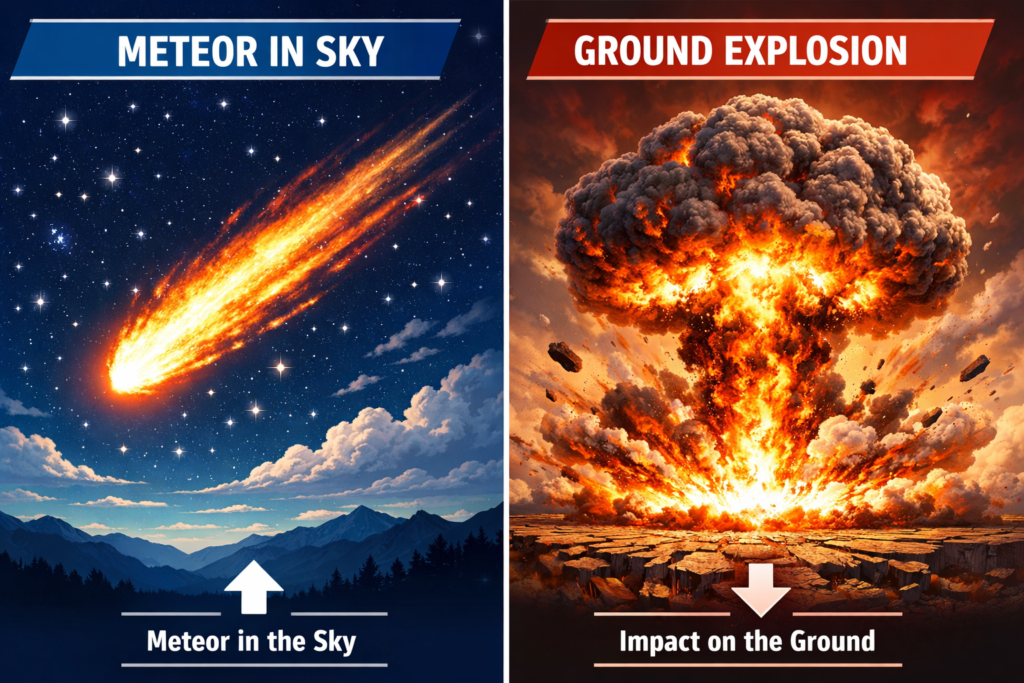
A meteor is the streak of light you see when a space rock burns up in the atmosphere. A meteorite, on the other hand, is what remains if the object survives its fiery descent and reaches the ground. Not all meteors produce meteorites, and not all create loud booms. The size, speed, and angle of entry all play a role in determining how dramatic the event will be.
Understanding this distinction helps clarify why some events are more noticeable than others. A larger meteor is more likely to produce both a visible flash and an audible boom, making it a prime suspect in incidents like this.
Scientific Explanation Behind Loud Booms
Sonic Booms and Shockwaves
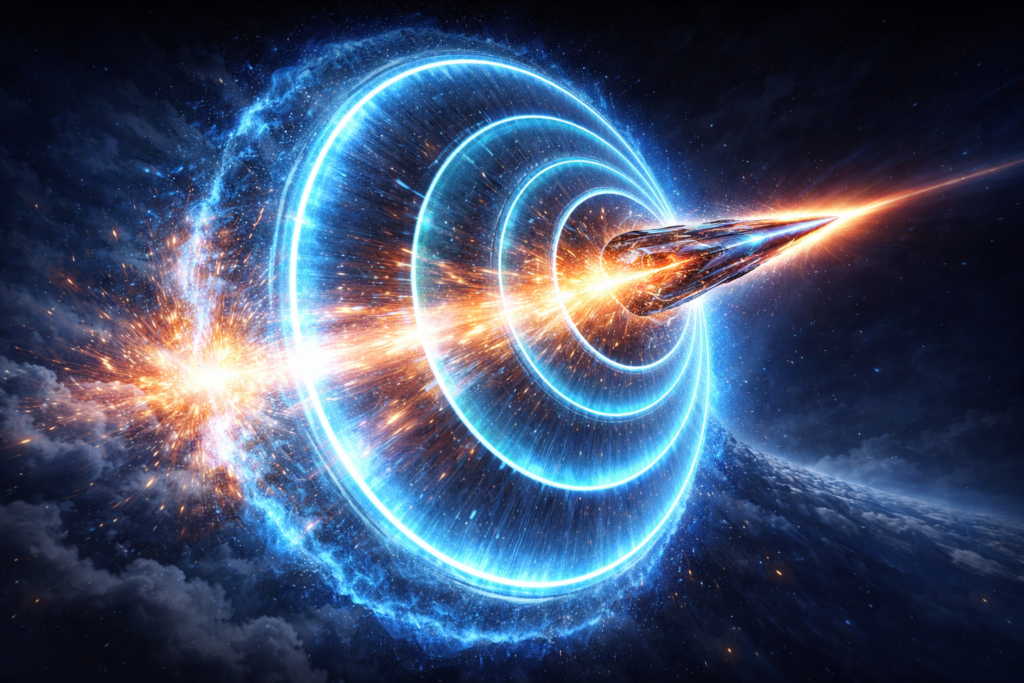
A sonic boom occurs when an object travels faster than the speed of sound, creating shockwaves that merge into a single, powerful sound. This phenomenon is not limited to aircraft; meteors can produce similar effects as they tear through the atmosphere. The resulting boom can be heard miles away, depending on the energy released.
The physics behind this is both complex and fascinating. It’s essentially the atmosphere reacting to something moving too fast for sound waves to move out of the way smoothly. Instead, they pile up and release all at once, creating that signature explosive sound.
Atmospheric Explosions
Sometimes, meteors don’t just pass through the atmosphere—they explode mid-air. This is known as an airburst, and it can release a tremendous amount of energy. These explosions can be powerful enough to break windows and be heard across vast distances, even if no debris reaches the ground.
This type of event could explain why so many people heard the boom without seeing anything unusual. The explosion may have occurred high above the clouds, making it invisible to many observers.
Could It Be an Explosion Instead?
Industrial Accidents Possibility
Whenever a loud boom is reported, the possibility of an industrial accident is often considered. Factories, chemical plants, and other industrial facilities can produce explosions under certain conditions. However, such events are usually quickly identified and reported by authorities due to their potential danger.
In this case, the widespread nature of the sound makes a localized industrial explosion less likely. Still, investigators always consider all possibilities before reaching a conclusion.
Military or Aircraft Activity
Another possibility is military or aircraft activity. Supersonic jets can produce sonic booms that sound very similar to explosions. If a jet breaks the sound barrier over a populated area, it can create a loud and startling noise.
However, such activities are usually tracked and regulated, and authorities often confirm or deny them quickly. If no such confirmation is given, attention shifts back to natural explanations like meteors.
Role of Weather Agencies
National Weather Observations
Weather agencies play a crucial role in analyzing these events. They use radar systems to detect unusual activity in the atmosphere, including potential meteor entries. While their primary focus is weather, their tools are also useful for identifying non-weather phenomena.
Their data can help determine whether something entered the atmosphere at high speed, providing valuable clues in solving the mystery.
Radar and Satellite Data Insights
Radar and satellite imagery can reveal patterns that are invisible to the naked eye. For instance, a meteor entering the atmosphere may show up as a brief streak or anomaly. These observations can confirm whether the event was natural or man-made.
Comparing Meteor Events vs Explosions
Key Differences Table
| Feature | Meteor Event | Explosion |
|---|---|---|
| Sound Range | Very wide | Localized |
| Visual Flash | Often present | Not always |
| Cause | Natural | Man-made |
| Duration | Seconds | Varies |
| Detection | Radar/Satellite | Immediate reports |
Past Similar Incidents in Ohio
Historical Meteor Sightings
Ohio has experienced meteor sightings in the past, some of which have also produced loud booms. These events often follow a similar pattern: a bright flash, a loud sound, and widespread confusion.
Previous Loud Boom Reports
There have been previous reports of unexplained booms in the region, not all of which were conclusively explained. This adds to the intrigue and shows that such घटनाएँ are not entirely uncommon.
Why Loud Booms Cause Panic
Human Psychology of Sudden Sounds
Humans are naturally wired to react strongly to sudden, loud noises. It’s a survival instinct that dates back thousands of years. When we hear an unexpected boom, our brains immediately switch into alert mode, trying to identify potential danger.

This instinct explains why such events quickly lead to widespread concern and speculation. Even if the cause turns out to be harmless, the initial reaction is often one of fear and urgency.
Final Thoughts: Meteor or Mystery?
The massive boom heard across Northeast Ohio remains a fascinating case of how natural and human-made phenomena can overlap in perception. While evidence often points toward a meteor or atmospheric event, the lack of immediate confirmation keeps the mystery alive. Events like this remind us how dynamic and unpredictable our planet—and the space around it—can be.
Conclusion
The loud boom that shook Northeast Ohio is a perfect example of how quickly an unexplained event can capture public attention. Whether it was a meteor blazing through the atmosphere or something else entirely, the incident highlights the importance of scientific investigation and reliable information. These events also serve as a reminder of the powerful forces at work both on Earth and beyond.
FAQs
1. What causes a loud boom like this?
A loud boom can be caused by meteors, sonic booms from aircraft, or explosions. Each has distinct characteristics that help identify the source.
2. Are meteor booms dangerous?
Most meteor-related booms are harmless and occur high in the atmosphere, posing no direct threat to people on the ground.
3. Can a meteor hit a city?
It is extremely rare for a meteor to directly hit a populated area. Most burn up before reaching the ground.
4. How can experts confirm the cause?
They use radar data, satellite imagery, and eyewitness reports to determine what happened.
5. Why didn’t everyone see the meteor?
Cloud cover, time of day, and the angle of entry can make meteors difficult to see, even if they produce a loud boom.