





The Dark Side of the Southern Ocean: 5 Dangerous Changes Happening Right Now
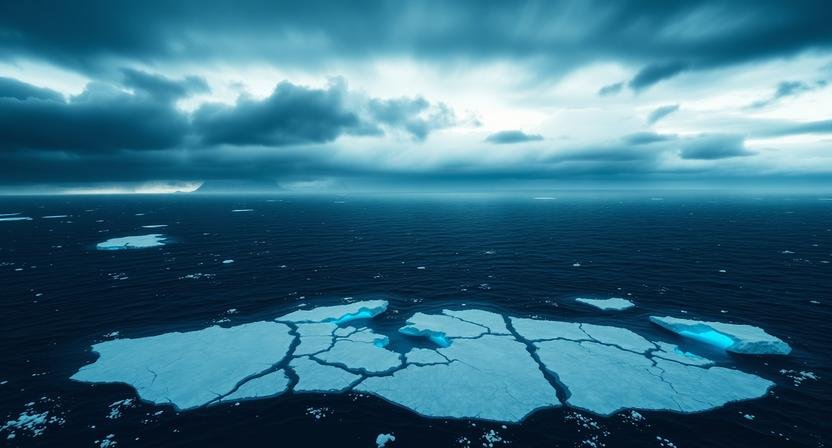
Table of Contents
Most people rarely think about the Southern Ocean, yet this icy and remote body of water quietly controls some of the most important systems on Earth. It circles Antarctica like a giant frozen ring, connecting the Atlantic, Pacific, and Indian Oceans into one powerful network. Scientists often describe it as the planet’s “climate engine” because it absorbs huge amounts of heat and carbon dioxide from the atmosphere. Without it, global warming would already be much worse than it is today. But now the Southern Ocean itself is changing at a frightening speed, and researchers across the world are sounding the alarm.
The scary part is that these changes are not isolated to Antarctica. What happens in the Southern Ocean affects coastlines, weather patterns, marine life, fisheries, and even food prices around the globe. Rising ocean temperatures, melting ice shelves, collapsing penguin habitats, and shifting currents are all connected pieces of a much bigger climate puzzle. New research published in 2026 suggests that parts of Antarctica may be approaching irreversible tipping points, especially in areas tied to major glaciers and sea ice systems.
Think of the Southern Ocean like the cooling system inside a car engine. As long as it works properly, the entire machine stays balanced. But when the cooling system starts failing, the damage spreads everywhere. That is exactly why scientists are paying closer attention to this region than ever before. Here are the five dangerous changes happening right now in the Southern Ocean and why the world should care.
Why the Southern Ocean Matters More Than Most People Realize
The Ocean That Controls Earth’s Climate
The Southern Ocean may look like an empty frozen wilderness on a map, but it performs a critical job for the entire planet. This ocean absorbs roughly 40% of the excess heat trapped by greenhouse gases and stores enormous amounts of carbon dioxide deep below the surface. That means it acts like a giant shield, slowing down climate change and helping regulate global temperatures. If the Southern Ocean weakens, Earth loses one of its strongest defenses against runaway warming.
What makes this region unique is its massive circular current known as the Antarctic Circumpolar Current. It is the strongest ocean current on Earth, continuously moving water around Antarctica and linking all major oceans together. Scientists say this circulation system helps transport nutrients, oxygen, and heat across the globe. In simple terms, the Southern Ocean acts like the beating heart of the world’s oceans. When that heartbeat changes, everything else feels the impact.
Researchers have recently discovered that warming waters are beginning to break down some of the ocean’s natural layers. Warm water from the deep ocean is now rising closer to Antarctica’s ice shelves, accelerating melting from below. This process creates a dangerous feedback loop where melting ice exposes more dark ocean water, which absorbs more sunlight and increases warming even further.
Recent studies suggest that Antarctic ice is not only melting but also being disturbed by powerful ocean waves and unusual ice dynamics. A detailed explanation of this phenomenon can be found in this research report on Antarctic ice behavior:
https://www.techexplorist.com/antarctic-ice-being-shaken-waves/103150/
Why Scientists Call It a Global Climate Engine
Scientists use the phrase “global climate engine” because the Southern Ocean directly influences weather systems worldwide. Changes in Antarctic waters can alter rainfall in South America, shift temperatures in Australia, and even impact storm systems in North America and Europe. It sounds unbelievable, but the world’s climate is deeply interconnected.
One of the most concerning discoveries from recent studies is that Antarctic ice melt may disrupt global ocean circulation. Freshwater from melting glaciers changes the density of seawater, making it harder for deep ocean mixing to occur. That may weaken the giant conveyor-belt system that distributes heat around the planet.
Climate experts worry this could trigger chain reactions that humanity is not fully prepared for. Imagine slowing down the bloodstream in a human body. Organs begin to struggle, systems lose balance, and eventually serious damage occurs. The same principle applies to Earth’s oceans. The Southern Ocean is no longer just a distant scientific curiosity; it has become one of the front lines of climate change.
Dangerous Change #1 – Antarctic Ice Is Melting Faster Than Expected
The Rise of the “Doomsday Glacier” Threat
One of the most alarming developments in the Southern Ocean is the rapid melting of Antarctica’s glaciers, especially the famous Thwaites Glacier, often called the “Doomsday Glacier.” Scientists gave it this nickname because of the catastrophic sea-level rise it could eventually trigger if it collapses completely. Recent studies show the glacier’s eastern ice shelf may disintegrate very soon due to warming ocean water attacking it from below.
The situation is becoming more dangerous because the glacier acts like a giant stopper holding back massive amounts of inland ice. Once that stopper weakens, surrounding ice sheets could begin flowing into the ocean much faster. Researchers estimate that the complete collapse of Thwaites alone could contribute around 65 centimeters of global sea-level rise. Even more concerning, it could destabilize larger parts of the West Antarctic Ice Sheet, eventually adding several meters to sea levels over time.
What makes this crisis terrifying is how quickly scientists’ predictions are changing. Just a decade ago, many believed these processes would unfold over centuries. Now researchers are observing major structural changes happening within years instead of generations. Satellite imagery shows fractures spreading across ice shelves like cracks in a windshield after a heavy impact.
What Thwaites Glacier Could Mean for Global Sea Levels
Rising sea levels may sound like a distant issue, but they directly affect millions of people living near coastlines. Cities such as Miami, Jakarta, Bangkok, and parts of New York already struggle with flooding during storms and high tides. Additional sea-level rise from Antarctic melting would intensify those risks dramatically.
According to recent reports, current global sea levels are already increasing by around 4 to 4.5 millimeters annually. That may seem small, but over time it turns “once-in-a-century” flooding events into regular disasters. Coastal infrastructure, ports, roads, and freshwater systems become increasingly vulnerable.
The Southern Ocean is at the center of this unfolding crisis because warmer currents flowing beneath Antarctica’s floating ice shelves are accelerating the melting process. Scientists now believe underwater heat may be even more dangerous than rising air temperatures. That hidden ocean warming is quietly destabilizing the continent from below, almost like termites weakening the foundation of a house.
Dangerous Change #2 – Sea Ice Loss Is Accelerating
How Warmer Waters Are Destroying Antarctic Sea Ice
Antarctic sea ice behaves differently from land ice. It forms and melts seasonally across the surface of the Southern Ocean, acting like a giant reflective shield that bounces sunlight back into space. For decades, Antarctic sea ice showed surprising stability compared to the Arctic. But that trend has now changed dramatically.
New research published in 2026 found that rapid sea ice decline since 2015 is strongly linked to ocean warming beneath the surface. Scientists discovered that a protective layer of cold water that once insulated Antarctic sea ice is weakening. As warmer deep water rises upward, it melts sea ice from underneath.
This matters because sea ice is essential for maintaining Earth’s energy balance. White ice reflects sunlight, while dark ocean water absorbs it. When ice disappears, the ocean captures more heat, which leads to even more melting. It is a dangerous spiral that becomes harder to stop over time.
Strong storms in the Southern Ocean are making things worse by stirring warmer water toward the surface. Researchers say this combination of warming and ocean mixing may continue pushing Antarctic sea ice toward long-term decline. The frightening part is that many climate models underestimated how fast this could happen.
Why This Impacts Weather Across the Planet
The loss of Antarctic sea ice does not stay trapped near Antarctica. It influences weather systems worldwide by altering the temperature difference between the poles and the equator. Those temperature contrasts help guide jet streams and storm tracks.
As sea ice disappears, scientists expect more extreme weather patterns across multiple continents. Some areas may experience stronger storms and flooding, while others face severe droughts and heatwaves. There is growing evidence that marine heatwaves linked to changing ocean systems are already becoming more common.
The Southern Ocean also helps regulate the exchange of heat between the atmosphere and the deep sea. When sea ice vanishes, more heat enters the ocean-atmosphere system, accelerating climate instability. It is like removing insulation from a freezer and expecting everything inside to stay cold.
Dangerous Change #3 – Ocean Circulation Is Starting to Shift
The Southern Ocean’s Role in Global Currents
The Southern Ocean drives one of the most important circulation systems on Earth. Deep cold water sinks near Antarctica, while warmer water moves upward elsewhere, creating a giant conveyor belt that distributes heat, nutrients, and oxygen across the planet.
Scientists are increasingly worried that melting Antarctic ice could disrupt this system. Freshwater pouring into the ocean reduces salinity, making seawater less dense and harder to sink. That may slow down deep ocean circulation over time.
This process is not just theoretical anymore. Sediment core studies and ocean measurements show that Antarctic meltwater influenced circulation during past climate transitions. Researchers fear humanity may now be triggering similar disruptions again.
Could Ocean Conveyor Systems Slow Down?
If major ocean currents weaken, the consequences could ripple across the world economy and climate. Fisheries may collapse in some regions due to changing nutrient flows. Weather patterns could become more chaotic. Certain regions might cool temporarily while others warm faster.
Some scientists also worry that weakened circulation could reduce the ocean’s ability to absorb carbon dioxide. That means more greenhouse gases would remain in the atmosphere, intensifying global warming. Discussions on climate forums and scientific communities increasingly focus on whether Southern Ocean changes could contribute to broader tipping points.
The truth is that Earth’s climate system depends heavily on stable ocean circulation. If the Southern Ocean begins losing that stability, the planet could enter a much more unpredictable climate era.
Dangerous Change #4 – Wildlife Is Facing a Survival Crisis
Emperor Penguins and the Collapse of Breeding Grounds
Few animals symbolize Antarctica like emperor penguins. These birds depend entirely on stable sea ice for breeding and raising chicks. But rising temperatures and collapsing ice conditions are now threatening their survival.
Recent reports show that mass drowning events have already killed thousands of emperor penguin chicks after sea ice broke apart too early. Scientists warn that populations could decline drastically by the end of the century if warming continues at its current pace.
Imagine trying to raise a family while your home keeps collapsing beneath your feet. That is essentially what is happening to these penguins. Breeding colonies that survived for generations are suddenly becoming unstable and unsafe.
Krill Decline and the Food Chain Disaster
Krill are tiny shrimp-like creatures, but they are one of the most important species in the Southern Ocean ecosystem. Whales, seals, penguins, and countless fish rely on them for food. Sea ice plays a critical role in krill survival because algae growing beneath the ice provides nourishment for young krill.
As sea ice disappears, krill populations may decline sharply. Scientists already see warning signs in several regions around Antarctica. If krill numbers crash, the entire Southern Ocean food web could unravel.
This would not only affect wildlife. Global fishing industries and food systems could also face disruptions. The Southern Ocean supports economically important fisheries, and ecosystem collapse could create ripple effects through international seafood markets.
Dangerous Change #5 – Deep Ocean Heat Is Rising
Circumpolar Deep Water and Hidden Ocean Heat
One of the most dangerous threats in the Southern Ocean is almost invisible. Beneath the cold surface lies a mass of warmer water known as Circumpolar Deep Water. Scientists recently discovered that this heat is moving closer to Antarctica’s ice shelves.
This hidden warming acts like a blowtorch beneath floating ice. Unlike surface melting caused by warm air, underwater melting can rapidly destabilize glaciers from below. Researchers now believe this process is one of the biggest drivers of Antarctic ice loss.
The scary part is that much of this warming remained undetected for years because deep ocean measurements in Antarctica are extremely difficult. Thanks to robotic floats, underwater sensors, and even tracking devices attached to seals, scientists are finally getting a clearer picture of what is happening.
Why Scientists Are Alarmed by Underwater Warming
Deep ocean heat is especially dangerous because it can continue melting ice even during colder seasons. Once warm water gains access beneath ice shelves, it becomes difficult to stop the process.
Researchers warn that this hidden heat may trigger irreversible tipping points in some Antarctic regions. That means even if humanity reduced emissions later, certain ice losses might continue for centuries.
Think about an iceberg melting from underneath. From the surface it may still appear stable, but deep below the waterline, its structure is already collapsing. That is exactly why scientists are deeply concerned about the Southern Ocean today.
The Economic and Human Cost of Southern Ocean Changes
Climate change in the Southern Ocean is not just an environmental issue. It carries enormous economic consequences. Rising sea levels threaten trillions of dollars in coastal infrastructure worldwide. Insurance costs are climbing, disaster recovery budgets are exploding, and governments face increasing pressure to adapt.
Fishing industries may also suffer as ocean ecosystems shift. Changes in marine species distribution could disrupt commercial fisheries and global seafood supply chains. Tourism in Antarctic regions may become more unstable as weather patterns grow increasingly unpredictable.
Communities living near coastlines are especially vulnerable. Flooding, saltwater intrusion, stronger storms, and erosion could displace millions of people during the coming decades. The Southern Ocean may seem distant, but its influence reaches directly into everyday human life.
What Scientists Are Predicting for the Next Decade
The next ten years may become one of the most critical periods in Antarctic climate research. Scientists expect continued monitoring of ice shelves, ocean heat, and sea ice trends to reveal whether certain tipping points are approaching faster than expected.
Several recent studies suggest Antarctica’s melting could expand significantly by 2100, with highly vulnerable regions facing accelerated collapse risks. Researchers are especially focused on how warmer ocean currents interact with fragile ice shelves in West Antarctica.
Experts also warn that climate feedback loops may intensify. Less sea ice means more heat absorption, which causes more warming and additional ice loss. Once those loops strengthen, reversing them becomes incredibly difficult.
Can the Southern Ocean Still Be Protected?
The future of the Southern Ocean depends heavily on global climate action. Scientists consistently emphasize that reducing greenhouse gas emissions remains the most important step humanity can take. Every fraction of a degree matters when it comes to slowing ice melt and protecting ocean systems.
Marine protected areas may also help preserve biodiversity and reduce stress on vulnerable ecosystems. International cooperation is crucial because the Southern Ocean belongs to no single nation. It is part of a shared global system that affects everyone.
There is still hope, but the window for meaningful action is narrowing quickly. The Southern Ocean has protected humanity from even worse climate impacts for decades. The question now is whether humanity will return the favor before irreversible damage occurs.
At the same time, for more regular updates and trending environmental and global news topics, you can explore the latest coverage here:
👉 https://globalnewssignal.com/category/latest/
Conclusion
The Southern Ocean is no longer a remote scientific mystery hidden at the bottom of the world. It has become one of the clearest warning signs of a rapidly changing planet. Melting glaciers, shrinking sea ice, rising deep-ocean heat, collapsing ecosystems, and shifting ocean currents all point toward a dangerous new reality unfolding around Antarctica.
What happens there will not stay there. Coastal flooding, extreme weather, disrupted food chains, and global climate instability are all tied to the future of this icy ocean. Scientists are discovering that changes once expected over centuries may now happen within decades.
The Southern Ocean has acted as Earth’s climate shield for generations, quietly absorbing heat and carbon dioxide while stabilizing global systems. But even shields can break under enough pressure. Humanity now faces a defining challenge: protect the systems that protect us, or risk losing one of the planet’s most important climate defenses forever.
FAQs
1. Why is the Southern Ocean important?
The Southern Ocean helps regulate Earth’s climate by absorbing heat and carbon dioxide. It also connects major ocean systems and influences global weather patterns.
2. What is the “Doomsday Glacier”?
The “Doomsday Glacier” refers to Thwaites Glacier in Antarctica. Scientists fear its collapse could significantly raise global sea levels.
3. Why is Antarctic sea ice declining?
Research suggests warming ocean water beneath the surface is melting sea ice from below, while storms and climate change accelerate the process.
4. How does the Southern Ocean affect global weather?
The Southern Ocean influences ocean currents and atmospheric systems that shape temperatures, storms, rainfall, and climate patterns worldwide.
5. Can the Southern Ocean recover?
Scientists believe reducing greenhouse gas emissions and protecting marine ecosystems could slow damage, but immediate global action is necessary.