





African Lion Exercise in Morocco: 5 Shocking Lessons from Real Search & Rescue Missions
What Is the African Lion Exercise?
Scale and Global Participation
The African Lion Exercise isn’t just another military drill—it’s the largest annual joint military exercise led by the United States in Africa, and it continues to grow in scale and complexity every single year. In 2026, the exercise involved more than 5,000 personnel in Morocco alone and over 40 participating nations, making it one of the most ambitious multinational military collaborations on the planet . Imagine a massive real-world simulation where armies from different continents come together, not just to train, but to learn how to operate as one unified force under pressure.
What makes this exercise unique is its geographic spread. It takes place across Morocco, Ghana, Senegal, and Tunisia, creating diverse operational environments—from deserts and mountains to coastal zones. This variety forces participating troops to adapt quickly, much like real-world conflict or disaster response scenarios. The complexity is intentional. Military planners want unpredictability because real crises rarely follow a script.
For readers, think of African Lion as a global “stress test” for military readiness. It’s not just about combat—it’s about logistics, communication, survival, and most importantly, search and rescue (SAR) operations. These missions often reveal the true strength of coordination between nations, especially when things go wrong unexpectedly.
Purpose and Strategic Importance
At its core, the African Lion Exercise is about building interoperability—a fancy word that simply means different militaries being able to work together seamlessly. In a world filled with unpredictable threats—natural disasters, terrorism, and humanitarian crises—no country can act alone. African Lion prepares forces to respond quickly and efficiently, whether it’s a battlefield scenario or a life-saving rescue mission.
For more detailed coverage of the incident, check out this latest report on the African Lion Exercise search and rescue mission.
The exercise also strengthens diplomatic relationships. Morocco, for example, plays a key role as a regional ally, hosting thousands of troops and facilitating complex operations. This cooperation helps stabilize regions facing political or security challenges, particularly in parts of Africa where instability has been rising.
But here’s the twist: sometimes the most valuable lessons don’t come from planned drills—they come from real emergencies that unfold during training itself. And that’s exactly what happened in 2026.
The 2026 Morocco Incident That Shocked the World
Missing Soldiers Near Cap Draa
In early May 2026, a routine training event took a dramatic and tragic turn. Two U.S. service members participating in the African Lion Exercise were reported missing near the Cap Draa Training Area, close to the coastal city of Tan-Tan in southern Morocco . According to official reports, the soldiers were off-duty and hiking near steep ocean cliffs when they disappeared, possibly falling into the Atlantic Ocean .
This wasn’t a combat situation. There were no enemies involved. Instead, it was nature—raw, unpredictable, and unforgiving—that became the biggest threat. The terrain in that region combines rugged cliffs, powerful ocean currents, and unpredictable weather conditions, making it extremely dangerous even for experienced personnel.
The incident quickly grabbed global attention, not just because of the missing soldiers, but because it highlighted a harsh truth: even in controlled training environments, unexpected dangers can escalate into life-threatening situations within minutes.
Massive Search and Rescue Response
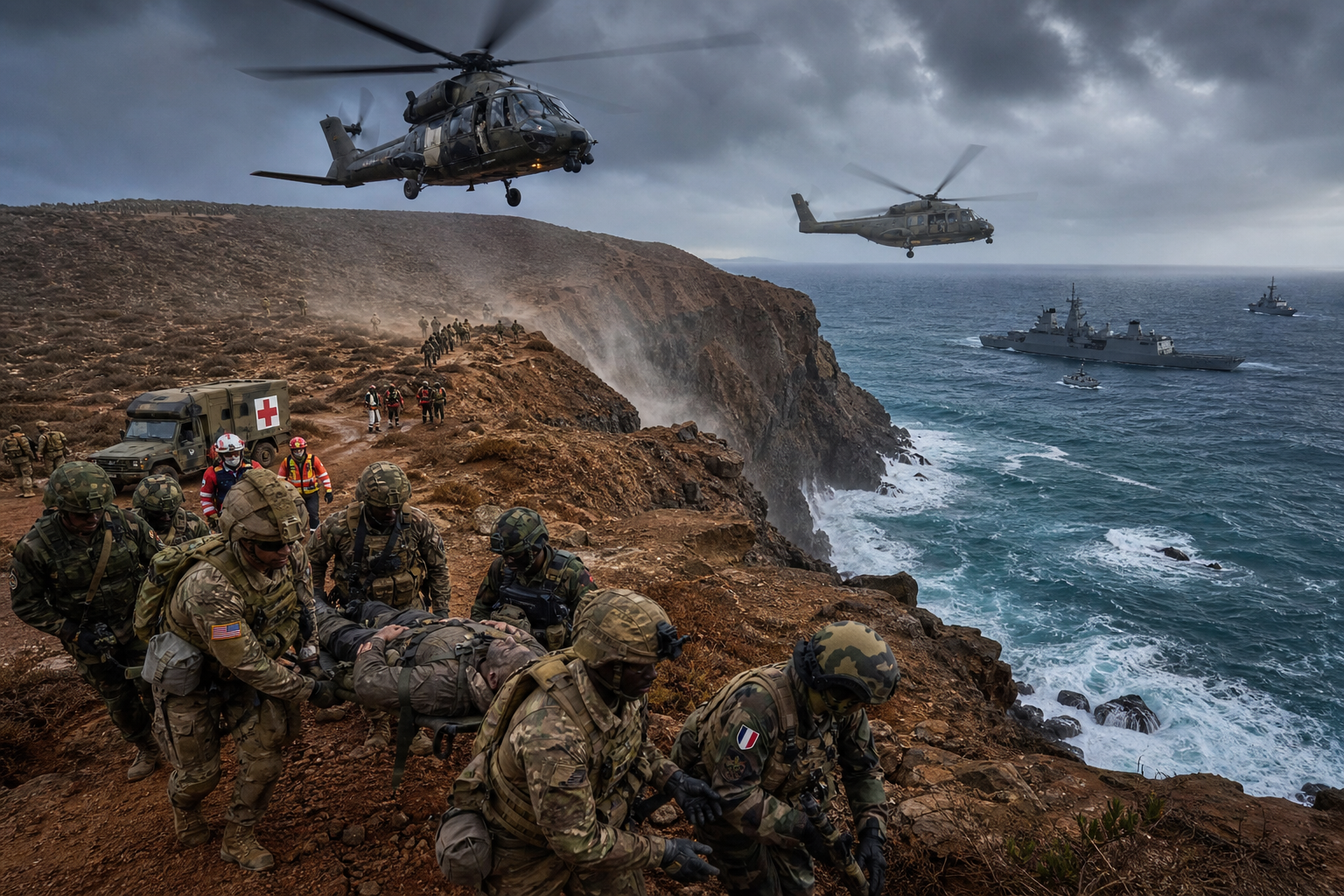
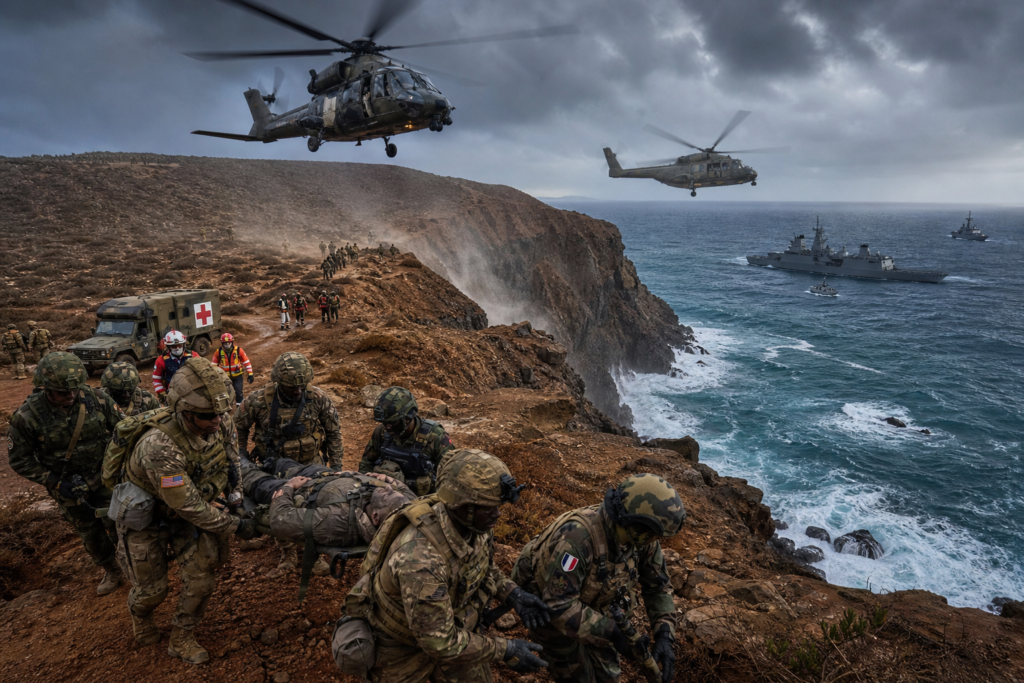
What followed was a large-scale, multinational search and rescue operation involving air, sea, and ground units. Helicopters, drones, naval vessels, divers, and mountain rescue teams were deployed almost immediately . This wasn’t just a local effort—it was a coordinated mission involving U.S., Moroccan, and allied forces working together under intense pressure.
The speed of the response demonstrated the strength of the exercise itself. Within hours, resources from multiple countries were mobilized, showcasing exactly why such exercises exist in the first place. However, the complexity of the terrain and ocean conditions made the operation incredibly challenging.
This real-life emergency turned the training exercise into something far more serious—a live test of global rescue capabilities. And from this moment came five powerful lessons that continue to shape how future exercises are conducted.
Lesson #1: Terrain Can Be More Dangerous Than Combat
Morocco’s Coastal and Desert Hazards
One of the most shocking takeaways from the African Lion Exercise 2026 is how dangerous the environment itself can be. The Cap Draa region isn’t just a scenic coastal area—it’s a volatile mix of steep cliffs, strong Atlantic currents, and semi-desert landscapes . These conditions create a perfect storm of risks that can catch even trained military personnel off guard.
Unlike combat zones, where threats are visible and anticipated, natural hazards are often underestimated. A single misstep near a cliff or a sudden wave surge can turn a routine walk into a life-threatening situation. The ocean, in particular, behaves unpredictably. Strong currents and waves can pull individuals away within seconds, making rescue extremely difficult.
Why Natural Risks Are Often Underestimated
Here’s the uncomfortable truth: soldiers are trained extensively for combat, but nature doesn’t follow rules or tactics. It doesn’t give warnings. It doesn’t negotiate. This makes environmental awareness just as important as combat readiness.
The 2026 incident serves as a wake-up call. Military exercises must place greater emphasis on terrain risk education, ensuring that personnel understand the dangers of unfamiliar environments. Because sometimes, the biggest enemy isn’t an opposing force—it’s the ground beneath your feet or the water beside you.
Lesson #2: Search and Rescue Is a Multi-Domain Operation
Air, Sea, and Ground Coordination
The rescue operation following the incident was a textbook example of multi-domain coordination. Helicopters scanned from above, ships patrolled the coastline, and ground teams navigated rugged terrain—all working simultaneously. This layered approach is essential in modern SAR missions, where time is critical and every second counts.
What makes such operations effective is synchronization. Each unit plays a role, like instruments in an orchestra. If one element fails, the entire mission can be compromised. The African Lion exercise provided a real-world demonstration of how these moving parts come together under pressure.
Technology and Drones in Modern Rescue
Technology played a major role in the search efforts. Drones and surveillance systems were used to cover vast areas quickly, providing real-time data to rescue teams. This highlights how modern SAR missions are no longer just about manpower—they’re about smart integration of technology.
From thermal imaging to GPS tracking, these tools increase the chances of locating missing individuals. But they also require skilled operators and seamless communication between units. The lesson here is clear: future rescue operations will depend heavily on tech-driven coordination, not just physical effort.
Lesson #3: Interoperability Saves Lives
Multinational Cooperation in Action
One of the strongest aspects of the African Lion Exercise is its emphasis on international cooperation. During the 2026 incident, forces from multiple countries worked side by side, sharing resources, intelligence, and expertise.
This level of collaboration doesn’t happen overnight. It’s the result of years of joint training and relationship-building. When a crisis hits, there’s no time for confusion or miscommunication. Everyone needs to be on the same page—and African Lion ensures that they are.
Think of it like a global emergency response team. Different uniforms, different languages, but one mission: save lives.
Lesson #4: Training Scenarios Mirror Real-Life Chaos
Simulation vs Reality Gap
Training exercises are designed to simulate real-world conditions, but nothing truly prepares you for the unpredictability of an actual emergency. The 2026 incident blurred the line between simulation and reality, turning a controlled environment into a genuine crisis.
This highlights an important gap: while simulations are valuable, they can’t fully replicate the emotional and psychological stress of real-life situations. Panic, uncertainty, and time pressure all play a role—and these factors can influence decision-making in critical moments.
The takeaway? Training must evolve to include more realistic and unpredictable scenarios, preparing personnel not just physically, but mentally.
Lesson #5: Human Error Remains the Biggest Risk
Off-Duty Risks and Decision-Making
Perhaps the most sobering lesson is that human error remains the most unpredictable factor. The missing soldiers were not engaged in active training—they were off-duty, taking a hike. This simple decision, combined with environmental risks, led to a major emergency.
It’s a reminder that safety protocols don’t end when training does. Awareness, discipline, and caution must extend beyond official exercises. Because in high-risk environments, even a casual moment can have serious consequences.
How African Lion Is Evolving After 2026
New Safety Protocols and Innovations
Following the incident, there is growing emphasis on improving safety measures within the African Lion Exercise. This includes stricter guidelines for off-duty activities, enhanced terrain briefings, and better use of tracking technologies to monitor personnel movements.
Military planners are also exploring advanced tools like AI-powered surveillance and predictive risk analysis. These innovations aim to identify potential dangers before they escalate, making future exercises safer and more efficient.
Key Statistics and Operational Insights
| Category | Details |
|---|---|
| Participating Countries | 40+ nations |
| Personnel in Morocco | ~5,000 troops |
| Total Exercise Duration | April 20 – May 8, 2026 |
| Operation Type | Multi-domain (air, sea, land) |
| Rescue Assets Used | Helicopters, drones, ships, divers |
Conclusion
The African Lion Exercise 2026 in Morocco delivered more than just military training—it revealed powerful, real-world lessons about risk, coordination, and human vulnerability. From dangerous terrain to complex rescue operations, the incident involving missing soldiers became a defining moment that reshaped how such exercises are approached.
Stay updated with more global military and breaking stories by visiting our latest news coverage hub.
These five lessons aren’t just relevant to the military—they apply to anyone operating in high-risk environments. Preparation matters. Awareness matters. And above all, respect for the unpredictable nature of the world around us matters most.
FAQs
1. What is the African Lion Exercise?
It is the largest annual U.S.-led military exercise in Africa, involving multiple countries to improve cooperation and crisis response.
2. Where does the African Lion Exercise take place?
It is conducted across Morocco, Ghana, Senegal, and Tunisia.
3. What happened in the 2026 exercise?
Two U.S. soldiers went missing near a coastal training area in Morocco, triggering a large-scale search and rescue operation.
4. Why is search and rescue important in military exercises?
It prepares forces to respond to emergencies, disasters, and real-life crises where saving lives is the top priority.
5. What are the main lessons from the 2026 incident?
Key lessons include environmental risks, the importance of coordination, and the impact of human decision-making.