





The Shocking Truth About Northern Lights Visibility After a Powerful Solar Flare
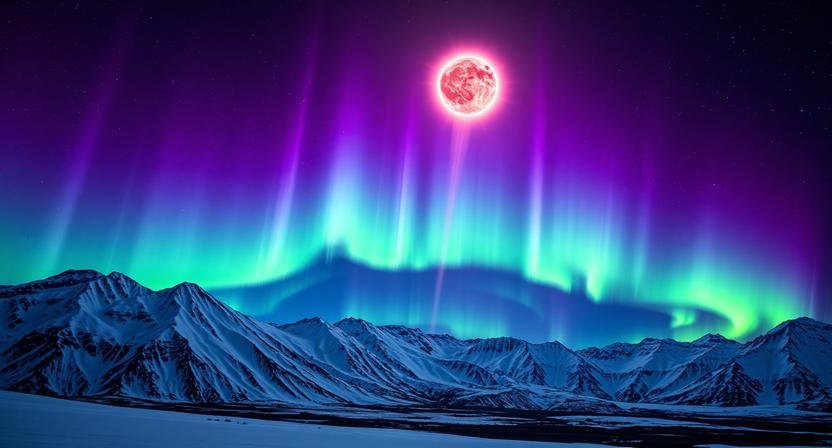
Table of Contents
The northern lights have fascinated humanity for centuries. These glowing curtains of green, purple, red, and blue dancing across the night sky feel almost magical. Every time headlines announce a powerful solar flare, social media explodes with excitement. People begin planning road trips, checking weather forecasts, and preparing cameras in hopes of witnessing one of nature’s most breathtaking spectacles. Yet there is a surprising reality that many people never learn until they miss a highly anticipated aurora event.
The shocking truth is that a powerful solar flare alone does not guarantee spectacular northern lights. Many skywatchers assume that bigger solar flares automatically produce brighter auroras visible across large regions. In reality, several scientific factors must align before an impressive display appears. Space weather experts continually monitor solar activity, geomagnetic conditions, and Earth-directed plasma clouds because predicting auroras is far more complex than simply measuring flare intensity.
Recent solar activity has kept astronomers extremely busy. NOAA’s Space Weather Prediction Center recently issued geomagnetic storm watches following multiple M-class and X-class solar flares capable of increasing aurora visibility across parts of North America. These events highlight how closely linked solar activity and auroral displays have become during the current phase of Solar Cycle 25. However, understanding the relationship between solar flares and northern lights requires a deeper look into the science behind these cosmic events.
Understanding the Fascination With the Northern Lights
Few natural phenomena capture human imagination quite like the aurora borealis. Long before scientists understood space weather, ancient cultures developed myths to explain the mysterious lights. Some believed they were messages from ancestors, while others saw them as celestial battles taking place above the Earth. Today, despite our scientific understanding, the emotional impact remains just as powerful.
The appeal of the northern lights comes from their unpredictability. Unlike a sunrise or a meteor shower with fixed timing, auroras depend on constantly changing solar and geomagnetic conditions. This uncertainty creates excitement and anticipation. Every forecast feels like a treasure hunt where success depends on nature’s willingness to cooperate.
Travelers spend thousands of dollars visiting destinations such as Iceland, Norway, Finland, Alaska, and northern Canada in pursuit of the perfect aurora experience. The growing popularity of aurora tourism has transformed remote regions into major travel destinations. Thanks to increased solar activity during Solar Cycle 25, more people than ever are witnessing auroras at lower latitudes, creating unforgettable memories and generating worldwide interest in space weather.
What Causes the Northern Lights?
The northern lights occur when charged particles from the Sun interact with Earth’s magnetic field and atmosphere. These particles travel through space as part of the solar wind and become concentrated near Earth’s magnetic poles. When they collide with atmospheric gases such as oxygen and nitrogen, energy is released in the form of visible light.
Different colors appear depending on the type of gas involved and the altitude where collisions occur. Green is the most common aurora color because oxygen molecules emit green light at certain atmospheric heights. Red auroras occur at higher altitudes, while blue and purple colors often come from interactions involving nitrogen.
The Role of Solar Flares
Solar flares are powerful explosions on the Sun’s surface that release enormous amounts of energy. These eruptions emit radiation across the electromagnetic spectrum, including X-rays and ultraviolet light. While solar flares receive significant media attention, they are only part of the story when it comes to aurora creation.
Coronal Mass Ejections and Earth’s Magnetic Field
The real aurora-producing stars are often coronal mass ejections, commonly known as CMEs. These massive clouds of magnetized plasma can be launched into space during solar eruptions. When a CME travels toward Earth and interacts with our magnetic field, it can trigger geomagnetic storms that dramatically increase auroral activity. The strongest aurora displays often occur when Earth receives a direct hit from a CME rather than merely experiencing radiation from a solar flare.
Why a Powerful Solar Flare Does Not Guarantee Aurora Visibility
Many people mistakenly believe that a powerful X-class solar flare automatically means spectacular northern lights. Unfortunately, space weather does not work that way. The size of a flare is only one factor among many that influence aurora visibility.
Direction Matters More Than Strength
Imagine a powerful firework exploding hundreds of miles away from where you are standing. Even though the explosion may be massive, you will not experience its full effect. The same principle applies to solar eruptions. If a CME is not directed toward Earth, its impact on our magnetic field may be minimal or nonexistent.
Scientists carefully analyze solar imagery to determine whether an eruption is Earth-directed. Some strong flares generate little or no CME activity, while moderate flares occasionally produce perfectly aimed plasma clouds that trigger spectacular auroras.
Timing and Atmospheric Conditions
Even when a CME strikes Earth directly, local viewing conditions can ruin visibility. Cloud cover, light pollution, moonlight, and seasonal daylight all play major roles. During summer months in northern regions, extended twilight can significantly reduce aurora visibility despite strong geomagnetic activity. Recent NOAA guidance has emphasized that favorable space weather alone cannot overcome poor observing conditions.
The Science Behind Geomagnetic Storms
Geomagnetic storms occur when solar particles disturb Earth’s magnetic field. These disturbances create conditions that allow auroras to expand farther away from the poles. The stronger the storm, the greater the chance of seeing auroras in unusual locations.
Understanding the Kp Index
The Kp index is one of the most important tools used by aurora forecasters. It measures global geomagnetic activity on a scale from 0 to 9. Higher values indicate stronger geomagnetic disturbances and broader aurora visibility.
| Kp Index | Aurora Visibility |
|---|---|
| 0-2 | Primarily Arctic regions |
| 3-4 | Northern high-latitude regions |
| 5-6 | Northern Europe, Canada, northern U.S. |
| 7-8 | Central Europe, mid-latitude U.S. |
| 9 | Extremely rare global visibility |
NOAA Geomagnetic Storm Classifications
NOAA classifies geomagnetic storms from G1 to G5. Strong storms classified as G3 or higher can push auroral visibility significantly southward. Recent forecasts have included G3 storm watches following Earth-directed CME events, creating excitement among aurora enthusiasts across North America.
How Solar Cycle 25 Is Changing Aurora Activity
Solar activity follows an approximately 11-year cycle. Solar Cycle 25 has exceeded many early predictions and has become one of the strongest cycles in recent decades. This increased activity has produced more sunspots, more solar flares, and more opportunities for aurora displays.
Current observations suggest that although the official solar maximum has passed, elevated activity continues throughout 2026. Experts note that powerful flares frequently occur during the declining phase of solar cycles. This means aurora opportunities remain abundant despite the gradual decrease in overall activity.
Data from multiple space weather sources indicate that 2026 remains one of the best years in more than a decade for observing northern lights. Strong solar activity combined with ongoing geomagnetic disturbances continues to create favorable viewing opportunities worldwide.
The Shocking Truth About Northern Lights Visibility
The biggest misconception surrounding auroras is that stronger solar flares automatically equal better visibility. In reality, many spectacular aurora displays come from moderate solar events that produce well-positioned CMEs. Conversely, some of the largest flares in recent years have generated surprisingly modest auroral activity because Earth avoided a direct impact.
This complexity explains why aurora forecasting remains challenging. Researchers use satellites, solar observatories, magnetic field measurements, and predictive models to estimate visibility. Even then, forecasts can change dramatically within hours. Recent research has highlighted ongoing challenges in solar flare prediction and space weather forecasting accuracy, emphasizing the unpredictable nature of these events.
Recent space weather forecasts have reinforced the importance of monitoring solar activity in real time. According to the latest update from the Space Weather Prediction Center, a G3 (Strong) Geomagnetic Storm Watch was issued for June 4–5, 2026, following multiple solar eruptions and Earth-directed coronal mass ejections (CMEs). Forecasters noted that the combined CME arrival could trigger strong geomagnetic storm conditions capable of expanding northern lights visibility well beyond its usual range. These events demonstrate why aurora enthusiasts closely follow space weather alerts, as even moderate changes in solar wind conditions can dramatically influence where and when the aurora borealis becomes visible.
Source: NOAA Space Weather Update: G3 Watch for June 4–5, 2026
Best Locations to See the Northern Lights After a Solar Flare
Location remains one of the most important factors for successful aurora viewing. Even during moderate geomagnetic activity, high-latitude regions enjoy significantly better visibility.
Northern Hemisphere Hotspots
Top destinations include:
- Iceland
- Northern Norway
- Finnish Lapland
- Swedish Lapland
- Alaska
- Yukon Territory
- Northern Canada
Unexpected Southern Viewing Opportunities
Strong geomagnetic storms occasionally push auroras into regions that rarely experience them. Recent storms have allowed sightings across parts of the United States, central Europe, and even locations much farther south than normal. These rare events generate enormous public interest because they bring the northern lights to audiences who might otherwise never experience them.
How to Track Aurora Forecasts in Real Time
Modern technology has made aurora tracking easier than ever. NOAA’s Space Weather Prediction Center provides real-time forecasts and aurora maps that update continuously. These resources help observers determine where and when visibility is most likely.
Several smartphone apps also offer notifications when geomagnetic activity increases. Combining these forecasts with local weather reports significantly improves your chances of witnessing an aurora display.
Real-time monitoring is especially valuable because geomagnetic conditions can change rapidly. A forecast that appears weak in the afternoon may evolve into a major aurora event by nightfall if solar wind conditions intensify unexpectedly.
Tips for Photographing the Northern Lights
Capturing the aurora requires preparation and patience. Modern smartphones can produce impressive results, but dedicated cameras still offer greater flexibility.
Successful aurora photography typically includes:
- Using a tripod for stability.
- Selecting long exposure settings.
- Shooting in RAW format when possible.
- Finding locations with minimal light pollution.
- Monitoring forecasts throughout the evening.
Night mode features on smartphones have improved dramatically, allowing casual observers to capture stunning images without expensive equipment. Some auroras even appear brighter in photographs than to the naked eye because camera sensors can collect light over extended periods.
Common Myths About Solar Flares and Aurora Displays
Several myths continue circulating online. One common misconception is that every solar flare causes northern lights. Another is that auroras always appear directly overhead. In reality, bright auroras can be visible from hundreds of kilometers away near the horizon.
Another myth suggests that auroras are dangerous. While severe geomagnetic storms can affect satellites, radio communications, and power systems, viewing the aurora itself poses no health risk. These colorful displays are simply visible evidence of interactions occurring high above Earth’s atmosphere.
Understanding these misconceptions helps observers set realistic expectations and appreciate the true complexity of space weather. Knowledge often enhances the viewing experience because it reveals the extraordinary chain of events occurring between the Sun and Earth.
Future Predictions for Northern Lights Activity
Looking ahead, aurora opportunities are expected to remain strong through the remainder of 2026 and into the early years of the declining solar cycle. Historical patterns show that significant solar eruptions can still occur after solar maximum.
Scientists continue monitoring active sunspot regions capable of producing powerful flares and CMEs. Recent events demonstrate that even moderate solar activity can generate impressive auroras when magnetic conditions align properly. The next few years may offer some of the best opportunities for skywatchers before solar activity gradually declines toward the next solar minimum.
Conclusion
The shocking truth about northern lights visibility after a powerful solar flare is that solar flare strength alone tells only part of the story. Coronal mass ejections, magnetic field orientation, geomagnetic storm intensity, weather conditions, and geographic location all determine whether an aurora becomes a once-in-a-lifetime spectacle or a missed opportunity.
As Solar Cycle 25 continues delivering elevated activity, aurora enthusiasts have an exceptional chance to witness these remarkable displays. The key is understanding that successful aurora viewing depends on a combination of science, timing, and a little luck. When all those elements align, the result is one of the most awe-inspiring experiences our planet has to offer.
Stay Updated on the Latest Space Weather New
Northern lights forecasts can change quickly as new solar flares, coronal mass ejections, and geomagnetic storm alerts emerge. For readers who want to stay informed about the latest developments in space weather, aurora forecasts, and breaking science news, it is helpful to follow trusted updates from official forecasting agencies alongside reputable news sources. You can monitor official alerts through NOAA’s Space Weather Prediction Center and explore additional breaking stories, trending events, and current updates at Global News Signal’s Latest News section: https://globalnewssignal.com/category/latest/
Keeping track of both official forecasts and current news coverage can significantly improve your chances of catching the next spectacular northern lights display.
FAQs
1. Can a powerful solar flare guarantee northern lights?
No. A powerful solar flare does not guarantee aurora visibility. Earth-directed CMEs and favorable geomagnetic conditions are also required.
2. What is the best Kp index for viewing auroras?
A Kp index of 5 or higher generally provides excellent opportunities, especially outside Arctic regions.
3. Are northern lights more common in 2026?
Yes. Elevated solar activity from Solar Cycle 25 continues to create frequent aurora opportunities during 2026.
4. What time is best for watching the northern lights?
The most favorable viewing window is usually between 10 p.m. and 2 a.m. local time.
5. Can smartphones photograph the northern lights?
Yes. Modern smartphones with Night Mode or Pro Mode can capture impressive aurora images under suitable conditions.