





California DMV Data Sharing Under Fire: Why Millions Are Calling It a Dangerous Overreach
Introduction to California DMV Data Sharing Crisis
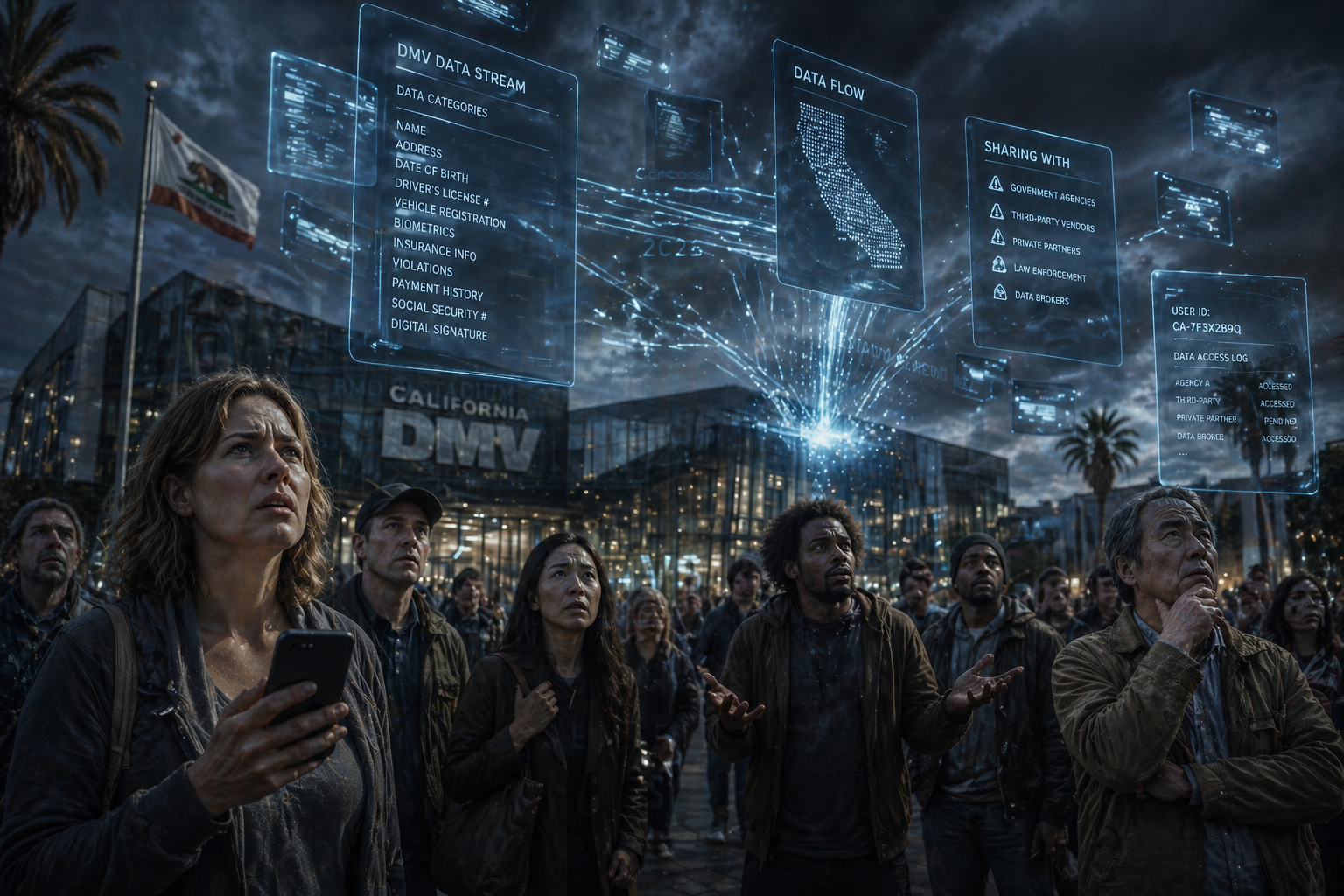
The debate around California DMV data sharing(California DMV Data Sharing )has exploded into one of the most controversial digital privacy issues of 2026. What once sounded like a routine administrative process has now become a heated political and social flashpoint. Millions of residents are questioning whether their most sensitive identity data is being safely protected or quietly expanded into massive government and interstate databases.
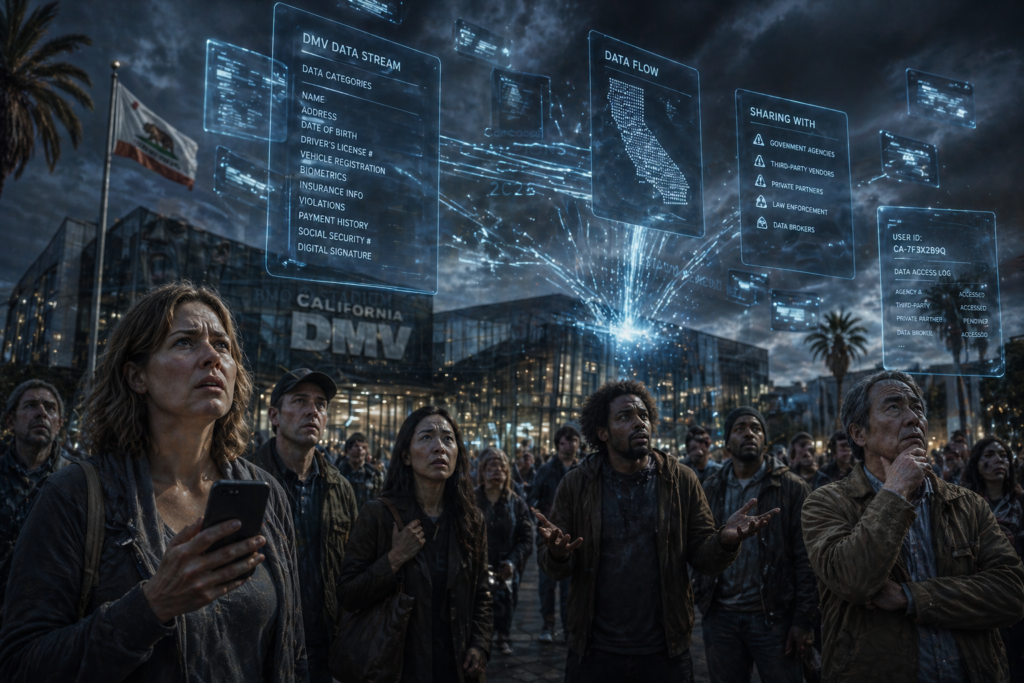
Recent reports and policy updates show California is preparing to expand its driver data integration into national verification systems tied to federal compliance frameworks like REAL ID. According to policy discussions, this involves sharing driver license information with external verification networks and national organizations that coordinate identity checks across states . For many people, that sounds less like paperwork and more like surveillance infrastructure.
At the center of the concern is a simple but powerful question: how far is too far when it comes to government data sharing?
What “California DMV Data Sharing” Really Means
When people hear “DMV data sharing,” they often imagine something simple like checking if someone has a valid license. The reality is far more complex. The modern DMV ecosystem connects multiple layers of identity verification systems that extend beyond state borders.
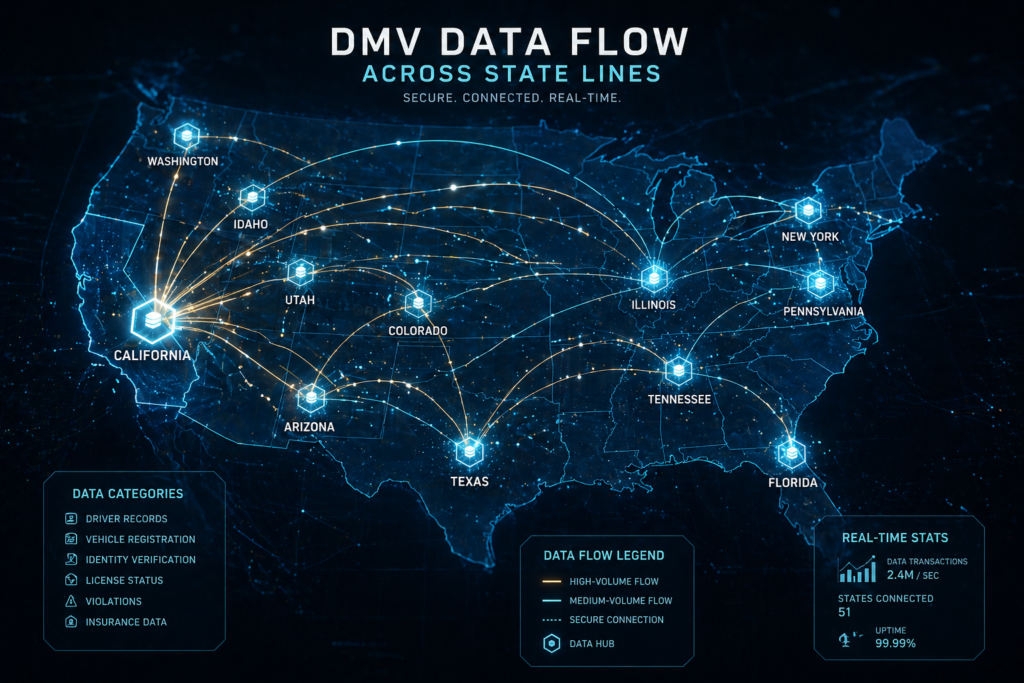
One major component is the interstate verification system used for REAL ID compliance. California has been discussing integration into national databases that allow states to confirm whether an individual holds multiple licenses or has inconsistent identity records . This system is designed to reduce fraud, but it also centralizes massive amounts of personal information.
This includes data such as:
- Full legal name
- Date of birth
- Address history
- Driver license numbers
- Verification status
The concern is not just what is shared—but who can potentially access it and how it might be used beyond its original purpose.
How the DMV Data System Works Behind the Scenes
To understand the controversy, you need to picture the DMV system like a giant invisible network of connected computers. When someone applies for or renews a license, their data doesn’t just sit in a local office anymore.
Instead, it flows into centralized systems managed through organizations like the American Association of Motor Vehicle Administrators (AAMVA), which helps coordinate interstate verification databases .
Think of it like this: instead of each state holding its own locked filing cabinet, all cabinets are now connected through a master hallway where authorized users can check information instantly.
This system improves efficiency, but it also creates a single point where:
- Data aggregation happens
- Cross-state identity checks occur
- Third-party systems may interface
And that is exactly where privacy advocates get uneasy.
Key Privacy Concerns Raised by Experts
Experts in digital governance argue that California DMV data sharing is not just a technical upgrade—it’s a structural shift in how identity is managed in the United States.
One of the biggest concerns is data re-identification risk. Even if systems claim to restrict access, combining datasets from multiple sources can create a “complete identity profile” of individuals.
Another concern involves immigration-related implications. Advocacy groups warn that shared DMV data—especially for individuals without Social Security numbers—could potentially be interpreted in ways that increase exposure to federal immigration enforcement actions .
There’s also the issue of third-party involvement. When non-government organizations help manage verification systems, questions arise about:
- Accountability
- Transparency
- Legal protection standards
The fear is not necessarily malicious intent—but unintended consequences of scale.
Real-Time Government Actions in 2026
The year 2026 has seen increased momentum in DMV modernization efforts across California. According to policy discussions, state agencies are pushing for expanded funding to upgrade outdated systems and improve identity verification infrastructure .
These upgrades are framed as necessary for:
- Fraud prevention
- Federal compliance
- System modernization
However, critics argue that modernization often comes with expanded data exposure. The more systems are integrated, the more opportunities exist for data to be accessed, copied, or misused.
At the legislative level, proposals have even been introduced to streamline data uploads into national systems, raising concerns about whether privacy protections are being weakened in the process.
The Immigrant Community’s Fear Factor
One of the most emotionally charged aspects of California DMV data sharing is its impact on immigrant communities.
California has issued driver licenses to millions of undocumented residents under state law. These individuals were previously promised a level of data protection. Now, proposed data sharing changes have triggered fears that their information could be used as a “signal” in broader federal enforcement systems .
This has created a trust crisis.
For many people, the concern is not abstract—it’s personal:
- “Will my information be safe tomorrow?”
- “Could this affect my family status?”
- “Was I ever truly protected?”
When trust breaks in public systems, it is extremely hard to rebuild.
Legal Framework Behind Data Sharing
The legal landscape is where things get complicated. On one side, federal law such as the Driver’s Privacy Protection Act (DPPA) restricts how DMV data can be used. It defines what qualifies as personal information and sets limits on disclosure.
On the other side, federal mandates like REAL ID require states to participate in verification systems, which inherently involve data sharing.
California law adds another layer, with restrictions on how Social Security numbers and identity data can be used beyond specific purposes .
This creates a legal triangle:
- Federal security requirements
- State privacy protections
- Interstate verification demands
When these three collide, ambiguity is almost inevitable.
Security Risks of Centralized DMV Databases
Cybersecurity experts often warn that the biggest risk in any large-scale system is centralization itself.
When data is spread across small systems, breaches are limited in scope. But when everything is connected, one vulnerability can expose a massive dataset.
Risks include:
- Unauthorized access attempts
- Subpoena-based data extraction
- Insider misuse
- System integration weaknesses
Even if systems are well protected, no database is ever truly immune. And when the stakes involve identity records of millions of people, the consequences become significant.
Public Backlash and Activist Response
Public reaction to California DMV data sharing has been intense. Advocacy groups argue that the expansion of data systems represents a shift toward surveillance-style governance.
Social media discussions frequently describe the system as:
- “Overreach”
- “Digital tracking infrastructure”
- “Identity consolidation system”
Activists are demanding stronger transparency laws, stricter data minimization policies, and clearer restrictions on cross-agency sharing.
The core message is simple: people want control over their own data.
Government Defense of the System
Government officials defend the system by emphasizing necessity. Their argument is built on three pillars:
- Preventing identity fraud
- Maintaining federal compliance
- Improving administrative efficiency
They also argue that participation in interstate systems is voluntary for states and designed to improve national security coordination.
From their perspective, data sharing is not surveillance—it is modernization.
Real-World Examples of Data Misuse
Concerns are not purely theoretical. Across the U.S., automated license plate systems and surveillance tools have sparked debates about data misuse and unauthorized access.
In some cases, law enforcement agencies have accessed shared databases in ways that surprised even local officials. These incidents highlight how quickly data systems can expand beyond their original scope.
Economic and Administrative Motivations
Upgrading DMV systems is expensive. California has requested significant funding—reportedly tens of millions of dollars—to modernize identity infrastructure and comply with national standards .
From an administrative perspective, the argument is efficiency:
- Faster verification
- Reduced fraud losses
- Better inter-agency coordination
But efficiency often comes with trade-offs, especially in privacy-sensitive systems.
Impact on Everyday Californians
For most residents, DMV data sharing feels invisible—until it doesn’t.
Everyday interactions affected include:
- License renewals
- Identity verification for jobs
- Travel documentation checks
Most people don’t realize how often their identity is validated behind the scenes.
Expert Opinions on Data Governance
Privacy researchers warn that modern systems risk creating what they call “identity linkage ecosystems.” This means multiple databases combining into a single, persistent digital identity profile.
The concern is not just what data exists—but how easily it can be connected across systems.
Future of DMV Data Sharing in California
Looking forward, California faces a difficult balancing act. The state must choose between:
- Stronger privacy controls
- Or deeper integration with national systems
Emerging technologies like AI-driven identity verification may increase efficiency, but also amplify concerns about surveillance and data tracking.
Conclusion
The controversy surrounding California DMV data sharing is not just about technology—it’s about trust, control, and the future of digital identity. As systems become more connected, the line between administrative convenience and privacy risk becomes increasingly blurred.
For ongoing updates and broader coverage on similar topics, readers can also explore related news and latest developments here: https://globalnewssignal.com/category/news/
Whether this evolution leads to safer systems or deeper surveillance will depend on how laws, technology, and public pressure shape the next phase of data governance.
Recent discussions around California DMV data sharing have been widely covered across multiple news platforms, highlighting growing concerns about how driver information may be handled and potentially shared beyond state systems. These developments have intensified public debate over privacy, transparency, and data protection in government databases.
FAQs
1. What is California DMV data sharing?
It refers to the exchange of driver and identity data between California DMV and interstate or federal verification systems.
2. Why is it controversial?
Because it raises concerns about privacy, immigration risks, and third-party access to sensitive personal data.
3. Is DMV data shared with the federal government?
Some data may be accessible through national verification systems required for REAL ID compliance.
4. Can individuals opt out of DMV data sharing?
In most cases, participation is tied to licensing requirements, so opt-out options are very limited.
5. What is the biggest privacy risk?
The biggest risk is large-scale data linkage, where multiple systems combine to create detailed identity profiles.