




Is the Voting Rights Act in Danger? 7 Powerful Impacts of the Louisiana Redistricting Case
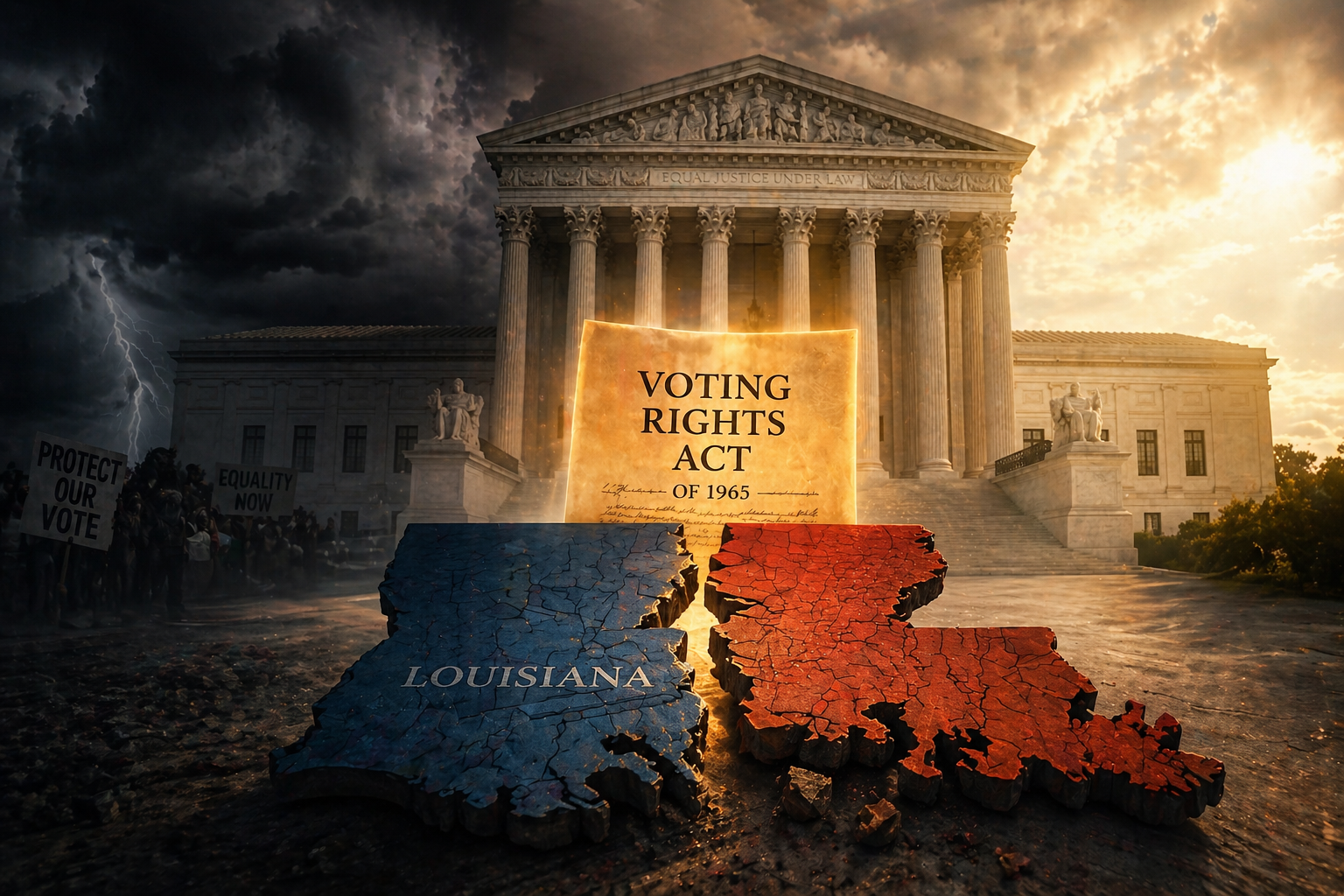
Table of Contents
Understanding the Voting Rights Act
Origins of the Voting Rights Act of 1965
The Voting Rights Act is not just another law—it’s one of the most powerful civil rights protections ever passed in the United States. Born out of the civil rights movement and signed into law in 1965, it aimed to eliminate racial discrimination in voting, especially in Southern states where Black voters faced systemic barriers. Think poll taxes, literacy tests, and outright intimidation—this law was designed to dismantle those obstacles once and for all.
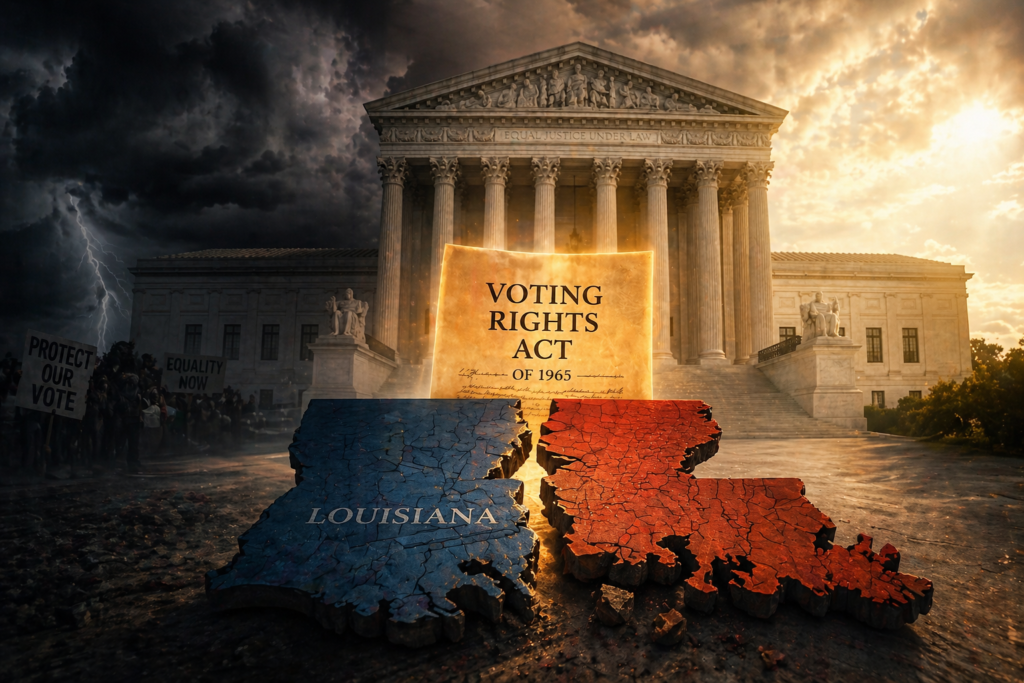
For decades, the Act worked like a shield. It ensured that minority voters could participate in elections without being unfairly silenced. The law became a cornerstone of democracy, often credited with dramatically increasing voter registration and political representation among African Americans and other marginalized groups. But laws don’t exist in a vacuum—they evolve, and sometimes, they weaken under pressure.
Fast forward to today, and the Voting Rights Act is facing one of its biggest tests yet. Recent Supreme Court rulings have chipped away at its core protections, raising a critical question: Is this historic law losing its power?
Key Provisions and Section 2 Explained
At the heart of the Voting Rights Act lies Section 2, a provision that prohibits voting practices that discriminate based on race. Unlike earlier laws that required proof of intentional discrimination, Section 2 allowed courts to strike down laws that had discriminatory effects, even if intent wasn’t obvious.
If you’re interested in more breaking updates like this, explore the latest reports in our news section to stay ahead of major business and industry trends.
This distinction is crucial. Imagine trying to prove someone’s thoughts—that’s what “intent” requires. But showing real-world outcomes, like reduced minority representation, is far more tangible. For decades, this “effects test” made it easier to challenge unfair district maps and voting laws.
However, that standard is now under threat. The Louisiana redistricting case has shifted the legal landscape dramatically, potentially redefining how Section 2 is applied—and that’s where things get serious.
What Happened in the Louisiana Redistricting Case?
Background of Louisiana v. Callais
The case known as Louisiana v. Callais didn’t appear overnight—it was the result of years of legal battles over how voting districts should be drawn. After the 2020 Census, Louisiana was required to redraw its congressional map. Given that roughly one-third of the state’s population is Black, advocates argued that the map should include at least two majority-Black districts.
Initially, courts agreed. A revised map was created with two such districts to comply with the Voting Rights Act. But opponents challenged this, claiming the map relied too heavily on race and violated the Constitution’s Equal Protection Clause.
What followed was a legal tug-of-war that eventually landed in the Supreme Court. And when the Court took up the case, the stakes couldn’t have been higher—not just for Louisiana, but for the entire country.
Supreme Court’s 6–3 Decision Explained
In April 2026, the Supreme Court delivered a 6–3 ruling that fundamentally reshaped voting rights law. The majority concluded that Louisiana’s attempt to create a second majority-Black district amounted to an unconstitutional racial gerrymander.
But the real bombshell wasn’t just about the map—it was about how the Court interpreted Section 2. The ruling introduced a stricter standard, requiring plaintiffs to prove intentional discrimination, not just discriminatory outcomes.
According to a recent live update from CNN, the Supreme Court is currently reviewing major legal matters involving immigration and federal protections, including Temporary Protected Status (TPS), which could influence broader policy decisions in 2026.
👉 Read the full update here: CNN Supreme Court Live News Update
This shift is massive. It’s like moving the goalposts mid-game. Previously, if a map diluted minority voting power, that could be enough to challenge it. Now, you have to prove lawmakers intended to discriminate—a much harder task.
Justice Elena Kagan, in her dissent, warned that the decision could render Section 2 “all but a dead letter,” highlighting the gravity of the ruling.
Why This Case Matters More Than You Think
Shift from “Effects” to “Intent” Standard
Let’s break this down in simple terms. Before this ruling, courts focused on what a voting law did. Did it reduce minority representation? Did it dilute voting power? If yes, it could be challenged.
Now, the focus is on why it was done. Was there a deliberate intent to discriminate?
This might sound subtle, but it’s a game-changer. Proving intent is notoriously difficult. Lawmakers rarely leave behind evidence saying, “We did this to discriminate.” As a result, many discriminatory practices could now slip through the cracks simply because intent can’t be proven.
This shift effectively weakens one of the most powerful tools used to fight voter suppression.
Legal Experts React to the Decision
Legal scholars and civil rights groups have reacted strongly to the ruling. Many describe it as a “devastating blow” to voting rights protections.
Experts warn that the decision opens the door for states to redraw districts in ways that disadvantage minority voters—while avoiding legal consequences. Others argue that the Court is simply enforcing constitutional limits on race-based decision-making.
Regardless of where you stand, one thing is clear: the rules of the game have changed.
7 Powerful Impacts of the Louisiana Redistricting Case
Impact #1: Weakening of Section 2 Protections
The most immediate effect is the weakening of Section 2. By raising the bar for proving discrimination, the Court has made it significantly harder to challenge unfair voting laws.
Impact #2: Harder to Prove Voting Discrimination
Requiring proof of intent adds a major hurdle. Many legitimate cases may never make it to court because the evidence simply isn’t there—even if discrimination exists in practice.
Impact #3: Rise of Partisan Gerrymandering
States may now use political motivations as a cover for racial discrimination. Since partisan gerrymandering is largely legal, it becomes a convenient loophole.
Impact #4: Reduced Minority Representation
Without strong protections, minority communities could see fewer representatives who reflect their interests, weakening their voice in government.
Impact #5: Nationwide Redistricting Ripple Effect
This ruling isn’t limited to Louisiana. It sets a precedent that could influence redistricting battles across the United States.
Impact #6: Political Power Shifts in Congress
Some analysts suggest the ruling could shift the balance of power in Congress, potentially benefiting Republicans in upcoming elections.
Impact #7: Future of Civil Rights Litigation
The decision could discourage future lawsuits, as the new legal standard makes success less likely.
Comparing Before vs After the Ruling
| Aspect | Before Ruling | After Ruling |
|---|---|---|
| Legal Standard | Effects-based | Intent-based |
| Ease of Proving Discrimination | Easier | Much harder |
| Minority Protections | Stronger | Weaker |
| Redistricting Challenges | More successful | Less likely |
| Political Impact | Balanced | Potential shifts |
What Critics and Supporters Are Saying
Civil Rights Groups’ Concerns
Civil rights organizations argue that the ruling undermines decades of progress. They warn it could lead to widespread voter suppression and reduced representation for minority communities.
Conservative Legal Perspective
Supporters of the decision argue that it prevents unconstitutional use of race in redistricting. They believe the Constitution should not allow race to dominate political decisions.
What Happens Next for the Voting Rights Act?
Possible Legislative Responses
There is growing pressure on Congress to update the Voting Rights Act and restore its strength. Whether lawmakers will act remains uncertain.
Upcoming Election Implications
The ruling comes just before major elections, meaning its effects could be felt immediately in how districts are drawn and how votes are counted.
Conclusion
The Voting Rights Act stands at a crossroads. The Louisiana redistricting case has not just changed one state’s map—it has reshaped the legal foundation of voting rights in America. By shifting the focus from outcomes to intent, the Supreme Court has made it significantly harder to challenge discriminatory practices.
So, is the Voting Rights Act in danger? The answer isn’t simple—but the warning signs are impossible to ignore. The future of fair representation, electoral equality, and democratic participation may depend on what happens next.
FAQs
1. What is the Voting Rights Act?
The Voting Rights Act is a 1965 law designed to prevent racial discrimination in voting.
2. What is Section 2 of the Voting Rights Act?
Section 2 prohibits voting laws that discriminate based on race, traditionally focusing on outcomes rather than intent.
3. What did the Supreme Court decide in 2026?
The Court ruled 6–3 to limit Section 2, requiring proof of intentional discrimination.
4. Why is the Louisiana case important?
It sets a nationwide precedent that could affect how voting laws are challenged.
5. Could this impact future elections?
Yes, the ruling could influence redistricting and potentially shift political power.